


Kinase inhibitors
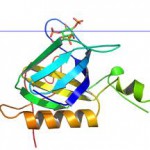 We have several kinase inhibitors in the drug pipeline. A famous one that has seen a lot of publicity in recent months is CAL-101. PCI-32765 is another. Both are kinase inhibitors, but they target different cellular pathways. PCI-32765 is what is called a Bruton kinase inhibitor. Never mind the jargon, and don’t get your feathers ruffled by all the cool science (which we described in greater detail in the earlier article on CAL-101). Here is the buzz in a nutshell. Both of these kinase inhibitors seem to work by flushing out CLL cells from their ever so comfortable homes in the lymph nodes, out into open blood circulation.
Why is this important? It is important because CLL cells are a lot harder to kill when they are nicely tucked away within the lymph nodes, surrounded by so-called “nurse-like cells” that are nurturing, supportive and providing them soothing feedback, basically telling the cancer cells they should live long and prosper. Out in the open blood circulation, CLL cells can get very lonely. And lonely cells without feedback to comfort them are a lot easier to kill.
Majority of chemotherapy drugs and the couple of monoclonal antibodies we have available to us are not very good at killing CLL cells when they are thus protected in lymph nodes (also spleen, liver). At least, the dosages needed to kill CLL cells in bulky nodes carries with it the penalty of high toxicity to match. Some drugs cannot do it at any dosage. For example, people with really bulky nodes (larger than 5 cm diameter) are considered “Campath ineligible” – there is no point subjecting such folks to the toxicity of Campath, it is not going to be able to budge those pesky lymph nodes.
Along come the kinase inhibitors, and the one thing that they do that captures the imagination is that they are able to kick out CLL cells hiding in lymph nodes. This is seen in dramatic shrinking of the size of the lymph nodes. Of course, all those CLL cells kicked out have to go somewhere, and the white blood counts of many patients under going treatment with either of these kinase inhibitors (CAL-101 and PCI-32765) shoot up soon after start of therapy. This is to be expected and not feared.
Do these kinase inhibitors have the killing power to finish the job and mop up all the CLL cells flushed out into the blood? To some degree they are able to kill the cancer cells. But that is not really their role, in my layperson opinion. The early trials focused on single agent therapy, using just the kinase inhibitor, to see what it can (or cannot) do, as well as get a handle on the toxicity side of the equation. Down the road, I have no doubt these new drugs will be coupled with other drugs to form powerful combinations. Kinase inhibitors to flush the swollen lymph nodes, another drug (perhaps Rituxan or ofatumumab) to do most of the killing of the cancer cells in the blood. Perhaps we will need other drug(s) to help clear the bone marrow. I am a little concerned that neither of these kinase inhibitors seem to be able to do a good job of clearing heavily infiltrated bone marrow. As we reported in an earlier article, infiltrative late stage CLL defines dangerous scenario.
ASCO Abstracts
ASCO (American Society of Clinical Oncology) has their annual meeting in June of each year. This year is no exception. Unlike ASH (American Society of Hematology), ASCO deals with all kinds of cancers, solid cancers like breast cancer, lung cancer, prostate cancer etc, along with a smattering of blood cancer studies. ASH is our dedicated meeting, focused only on blood cancers. Nevertheless, this years ASCO has several interesting papers and the abstracts are just out. I am sorry I won’t be able to attend the meeting in person due to health issues. But the abstracts are the next best thing to being there in person. Here is the first one, dealing with the latest results from the ongoing early stage PCI-32765 trials. My two cent cheat sheet follows the abstract.
2011 ASCO Annual Meeting
Abstract No: 6508 (J Clin Oncol 29: 2011 (suppl; abstr 6508))
Activity and tolerability of the Bruton’s tyrosine kinase (Btk) inhibitor PCI-32765 in patients with chronic lymphocytic leukemia/small lymphocytic lymphoma (CLL/SLL): Interim results of a phase Ib/II study.
Author(s): J. C. Byrd, K. A. Blum, J. A. Burger, S. E. Coutre, J. P. Sharman, R. R. Furman, I. W. Flinn, B. W. Grant, D. A. Richards, W. Zhao, N. A. Heerema, A. J. Johnson, R. Izumi, A. Hamdy, S. M. O’Brien; The Ohio State University Comprehensive Cancer Center and Arthur G. James Cancer Hospital and Solove Research Institute, Columbus, OH; The Ohio State University, Columbus, OH; University of Texas M. D. Anderson Cancer Center, Houston, TX; Stanford Cancer Center, Stanford, CA; Willamette Valley Cancer Institute, US Oncology, Springfield, OR; Weill Cornell Medical College, New York, NY; Sarah Cannon Research Institute and Tennessee Oncology, Nashville, TN; University of Vermont College of Medicine/Fletcher Allen Health Care, Burlington, VT; US Oncology Research, LLC, The Woodlands, TX; Texas Oncology, Tyler, TX; Pharmacyclics, Sunnyvale, CA
Background: Btk is essential to B-cell development and function. Btk is highly-expressed in CLL and its inhibition by the potent irreversible inhibitor PCI32765 (P) promotes apoptosis and inhibition of cytokine, chemokine, microenvironment-mediated signaling, proliferation, and chemotaxis ex vivo. We report interim results of a large Phase Ib/II trial of P in CLL/SLL.
Methods: Two cohorts (previously untreated [PU] >65 yrs old and relapsed/refractory [R/R] disease following at least 2 prior therapies [Rx] including fludarabine) of CLL patients (pts) were treated with oral P administered daily for 28-d cycles until progression of disease (PD). Doses of 420mg (24 PU and 27 R/R) and 840 QD (31 R/R) were examined.
Results: Of the 78 pts enrolled, data from the first 39 pts will be sufficiently mature as of May 2011 to assess IWCLL2008/Cheson response criteria. R/R pts had a median age of 64, 37% were Rai III/IV, and median of 3 (range 2-10) prior Rx. 87% had at least one poor-risk molecular feature: del(17p)-30%, del(11q)-21%, IgVH un-mutated 70%. Treatment has been well tolerated with grade >3 AEs potentially related to P in 26% of pts. >Gr 3 cytopenias have been noted in <5% of pts. No pts have had LFT elevations. In evaluable pts with lymphadenopathy, the rate of nodal response (LNR; >50% reduction in target lesions) is 89% (25/28 pts). An increase in absolute lymphocyte counts (ALC) occurred in 75% of pts and has decreased over time in the vast majority. At a median follow-up of 4 months, 17 (44%) have a PR (n=15, 39%) or CR/CRu (n=2, 5%). Response has been similar in all genomic groups. Notably, 4 of 12 pts with del(17p) have responded and 7 others remain on P Rx with improving SD. Mature response data will be updated. At a median follow-up of 4 months, 34/39 pts in the 420 mg cohort remain on P therapy with only one PD. Conclusions: PCI32765 is highly active and well tolerated in CLL/SLL pts irrespective of high risk genomic abnormalities. Although follow-up is short, the high response rate and very low progression rate suggests that PCI-32765 may be an important new targeted treatment approach for CLL pts, including those with del(17p).
Cheat sheet (for what it is worth)
- The author list is literally a who’s-who of CLL experts. Rock stars each and everyone of them!
- Bruton kinase (“Btk”) is involved in the ability of B-cells to talk to other cells, have babies and move around, homing in to comfortable niches in the lymph nodes. Shutting this pathway makes life a lot more uncomfortable for B-cells. (All B-cells need Btk functioning, not just cancerous CLL cells. In other words, PCI-32765 targets healthy B-cells too, not just CLL cells).
- This study looked at two groups of patients. Previously untreated as well as relapsed / refractory patients. Drug was given as an oral pill in 28 day cycles for as long as the patients’ CLL did not progress.
- Early stage trials are all about finding the right dose. The previously untreated folks got 420mg each day. The relapsed / refractory folks were split into two groups, getting 420mg or 840mg of the drug.
- 78 patients are enrolled, but only the first 39 patients have been in the trial long enough and the report is limited to them. The relapsed/refractory group was suitably tough group, high Rai stage, lots of guys with 17p or 11q deletions, a whopping 70% were unmutated IgVH.
- Adverse effects greater than grade 3 were seen 26% of patients. That is not trivial! Remember, “greater than grade 3” means grade 4. That is as high as it gets, without the patient actually being dead. Some researchers use the cute phrase of “grade 5 adverse effect” to avoid using the phrase “dead”. So, a quarter of the folks had the highest grade adverse effects. That was a bit of a shock to me, I expected far lower toxicity.
- On a positive note, there was very little liver toxicity and grade-4 cytopenias were seen in less than 5% of patients. (I wish they gave the percentages for lower grade adverse effects! How about how many adverse effects were seen that were higher than Grade 2? )
- 25 out of 28 patients with swollen lymph nodes had better than 50% shrinkage of nodes. Way to go! This was much hoped for and the drug did not disappoint on this front.
- As expected, white cell count increased in the blood as the lymph nodes shrank, but this too gradually came down as the lonely CLL cells in the blood got killed. Not a big deal folks, this is not to worry about.
- These are early results, only 4 months or so of follow-up. It does not help to get fixated on response statistics this early. But the interesting thing is that patients across all prognostic risk groups responded. In particular, 4 out of the 12 people with 17p deletion responded – thus far. Others may join them over time – we can only hope.
- All in all, these are encouraging results. With more late stage trials and especially in well designed drug combinations, PCI-32765 may prove to be an important drug for our guys. Keep your fingers crossed!
- But the results are early. Details are sketchy. For example, there is no mention of bone marrow disease. Did PCI-32765 do a better job of clearing the bone marrow than CAL-101? Inquiring minds want to know. Also, I would like greater detail in that scary 26% of patients with grade 4 adverse effects. Exactly what kind of adverse effects are we talking about? Did they resolve over time? Were they more pronounced in the group that got 840mg of the drug – was it a matter of tweaking the drug dosage down a bit?
Site News:
Guys, as I read through all the ASCO abstracts, I will be reviewing some of them as full-length articles such as this one. Others will be reviewed only as short “Tidbits“. You just have to get into the habit of visiting the homepage ( updates.clltopics.net ) and click on the tasty looking bruschetta Tidbits logo if you don’t want to miss this stuff. I notice very few of you have found your way there. Did you know I posted an interesting tidbit last night, about a clinical trial that wants to control early stage CLL with nothing more than a cocktail of broad spectrum antibiotics? And it is not a crazy idea either! You won’t know about this and all the ASCO stuff I will be publishing there, unless you get into the habit of visiting – I will not be sending out emails every time I have a new tidbit to report.
Different subject, several of you wrote and asked for the date of our Fall CLL Workshop, so you can plan your schedules. It is going to be on the second Saturday in August, on the 13th. As for the topic of our workshop, again based on feedback I got, it will be all about CLL complications: infections, second cancers, autoimmune diseases, B-symptoms, cytopenias. Quite a lot of ground to cover and I expect we will be busy for the the duration of the workshop, 1:00pm through 5:00pm. We will send out driving directions later on to folks who wish to attend, as we get closer to the date.
I would like to thank all the folks who have written to ask about my pesky knee problem. It seems I am not yet far enough along to justify a full fledged knee replacement. And yet, the damage is extensive enough after four decades of neglect and abuse that the surgeon did not hold much hope for a simple arthroplasty to clean up the mess inside just a bit. So, I get to do the middle path: exercise, pain medication, ugly looking knee brace and weight loss. Uggh. The good news is that the surgeon turned out to be an old student of mine, back when I was teaching freshman chemistry at Princeton. I was relieved when he told me he had aced my course. I would not want a surgeon who held a long standing grudge because I had flunked him!



 RSS Feed
31 comments on "PCI-32765: Interim results of Phase I/II study"
oh no……..I am doomed not to get to your workshops:-( I will be in CA in August…at least that is my hope when finished with the 15 Rutuxen infusions.
thanks for reminding me about the tidbits!! and your ongoing dedication to helping us.
darlene
Thanks Chaya for the very interesting info. Where will the workshop be? I’m very interested in the upcoming topics as have been doing battle with skin cancers. Wishing you lots of success with wgt loss and happier knees. ;=)). Montana Mollie
MLMG:
Our workshops are always in Columbia, MD. That is where I live.
Chaya, lots to think about – I love the new tidbits idea.
Regarding PC1-32765, I’m wondering – is it very different in effect from Methylprednisolone? Last summer, for a sudden hearing problem, I took a quite modest course – 175mg over 5 days. My WBC shot up from 200 to 300 and nodes and spleen reduced considerably. Of course without further treatment, counts settled back to the original very quickly. Maybe HDMP plus R may be just as effective?. Of course, the PC1-32765 seems to continue to kill off the lymphs on its own, so probably not. J
My doctor has stopped using HDMP because of the infection hazard, but PC1 seems to be just as dangerous.
One further question, if I may. My doctor is resolutely refusing to introduce Rituxan until my WBC is below 20,000 – not likely now on Fludara lite. After 3 courses, I’m stalled at 58,000 last count. I have no kidney problems by the way. I would appreciate your opinion.
Regarding the antibiotics, I’ve often wondered about chronic infection and cll – even something as simple as low grade dental infection etc may be relevant.
Thanks very much for your valuable work, and good luck with the knee.
Mary
Chaya, thank you for pointing out how to get to “Tidbits”. Would have missed it otherwise, even though I obsessively check the articles on your site for new info.
Also, through Amazon, I purchased the book you recommended: THE EMERPEROR OF ALL MALADIES. As you said, not a book to be read in one gulp, but extremely difficult (for me) to put down. A whole new world, just incredible!!
As a 2nd aside, do you know if something called “cold agglutinin” is common in CLL? I typed this word into your search engine and nothing came up. Thanks.
Chaya –
Since you always have a “nose for news” that is so helpful to us as patients, do you know of any single agent and / or combination treatment trials at the Stage III level that are coming online soon, so as to be able, if one is in the proper circumstance, investigate them?
Clarifcation of the above – single or combination trial using PCI-32765. thanks
Hotdog59:
There is one Phase-I trial that you might want to check out, here is the link: http://clinicaltrials.gov/ct2/show/NCT01292135
It is a double arm trial. One arm gets FCR + PCI-32765. The second arm gets bendamustine + Rituxan + PCI-32765. High impact combinations, both of them.
They are looking for 60 patients with confirmed CLL who have progressed to where therapy is necessary. Sounds like they will take either chemo naive or previously treated patients. Multiple centers where the trial is administered, take your pick. It just opened in February of this year, so there should still be plenty of spots left.
Chaya,
Thank you for this article, which couldn’t be more timely for me. I’m scheduled to begin the PCI-32765/ofatumumab trial at Ohio State this week. As I’m double refractory with a grossly enlarged spleen (and unmutated IgVH), this seems like a good choice. The first 28 days of the trial entail only the PCI-32765 pill once a day; the next 8 weeks continue the daily pill and add weekly infusions of ofatumumab. After that, a month off the ofatumumab and then four monthly infusions. The daily pills continue until disease progression.
Past treatments have resulted in life-threatening complications for me, including a pulmonary embolism when I received a test dose of Rituxan in 2003. My white count at the time was very high (500,000+) and this is believed to have been a factor. With WBC now at about 200,000 and likely to rise with the administration of PCI-32765, my doctors and I are approaching ofatumumab with a lot of caution. Platelets are also a problem, with latest count at 49,000 (recently as low as 24,000). Hopefully the trial drugs will ultimately improve this as well.
For the moment, what I really dread is the weekly commute to Columbus from Virginia!
I wish you all the best in treating your knee.
Betsy
Maria Cherie
Chaya,
Thank you for sending us this great info. I think I’ll forward it to my oncologist. I was not aware of the Tidbits you do so I’m one of the guilty ones who hasn’t been taking advantage of this gift you give us. I plan to start!
So sorry to hear you have to deal with the knee pain and such. Due to surgery on my lower right leg back in 1996, a rod was put inbetween the bones to help the healing which left my right knee a wreck! So believe me, I know that pain and struggle. However, I have had the privilege of being under the care of a great Physical Therapist at Howard County General Hospital who has helped me strength not only that leg but the knee, too. Don’t know if this is something that might help you, but I highly recommend Helen McMullin! The degree of pain is far less now.
Take care.
Maria Cherie
Chaya,
Kinase inhibition seems to be a promising strategy and something in my future as I am signed up for a trial using PCI-32765 solo at Dr. Byrd’s Clinic at OSU. I am in contact with two CLLers who are reporting good news so far with this agent.
MaryC,
I was initially treated with RF (Rituxan/Fludarabine) concurrently with a WBC @300k. Since my kidneys were being negatively impacted by the cancer prior to any TX I was greatly concerned and asked Dr. Byrd whether or not I could survive TX without losing my kidneys, the concern being TLS (Tumor Lysis Syndrome)? He replied that TLS is seen in patients with tumor loads under 50k and that he had yet to have to dialyze a patient. IMPORTANTLY: Rituxan is commonly used on first infusion of cycle one by only 20% of the standard 375mg/m2 on the first day. The other precaution is to have Rasburicase on hand should Allopurinol fail to keep uric acid levels below danger zone. The 20% R on the first day was pioneered by Dr. Kanti Rai. Does your Doc know of this?
During my TX I had no change in my creatinine or kidney function in general. I did develop, an as yet unexplained, kidney failure later not related to TLS.
Regarding agents that clear the nodes: Steroids and AMD3100 both kick the little “Bs” out of the nodes but there is clearly something extra happening with CAL-101 and PCI-32765 that go beyond just clearing the nodes. My layman’s pondering raises the following questions:
1) of whether the efficacy of kinase inhibitors can be linked to the state of a patient’s immune system functioning and is that necessarily linked to cytogenetic profiling?
2) are the reported serious adverse events due mainly to pretreatment conditioning that beats up patients’ immune systems or can AVs be correlated to the percent of kinase binding? Binding is reported as very durable but I have not seen a quantification of uninhibited kinases required to carry on needed signaling.
Though my kidneys are beat up pretty badly I continue to be remarkably healthy in other respects so I may be an interesting guinea pig for PCI-32765.
Great job on this report – As usual!
WWW
Wayne, thanks very much for your response. I’m going to push for Rituxan this morning at my review appointment. I will need something to clear my nodes also, if I’m to get a decent remission, but, I have little if no chance of trying the above
agents in the near future.
Best wishes,
Mary
Chaya,
Had total right knee replacement done about 4 years ago when I was 70. You will be great. Do rehab. at home and at a facility if possible. It is good to be with others in the same boat. I am going really well. Chaya this may be an obsurd question but after watching 60 Minutes and the Lance Armstrong expose I was wondering about the use of EPO in certain leukemias and lymphomos. I am at the early state of CLL and am W & Waiting. So very sorry that so many young folks are dealing with CLL. I am symptom free so far but who knows what will happen down the line. Thank you so very much for all you do. You are awesome.
Claire
The two arm Phase I trial referenced by Chaya depressed me a bit: both arms involved very heavy duty chemo and thus all the toxic dangers that entails. I wish there were more non-chemo trials using PCI-32765. I know that there are several using PCI + R or O, but I don’t believe they are as widely available.
Chaya,
“The author list is literally a who’s-who of CLL experts. Rock stars each and everyone of them!”
Thanks for the valuable heads up. Could you fill me in on R,R. (Richard) Furman’s work on CLL? He’s in New York and I would like to know more about what has put him on the map of key CLL players.
My own awareness of him is that he has a keen and encyclopedic knowledge of CLL research,
–Mark
Thanks Chaya for another informative article.
Be well,
Monique
Chaya on the CAL 101 + R, Dr. Coutre says his marrow is clearing well, he is judging this by the CBC that is now almost normal. But they have also scheduled a BMB for a month from now so we will get a better picture then. I am very curious, Mark is not curious enough to desire the BMB…… Beth
Ditto to LynnS. Was hoping to “find” PCI-32765 + O or PCI-32765 + R, or PCI-32765 + F/FO/FR, 1) More widely available and or 2) to to avoid the alkylator at the very least, and the nucleotide inhibitor as “dessert” for a first timer needing initial chemo soon.
Hope all goes well with your knee Chaya.
HotDog59
I’m one of those in the referenced trial–previously untreated. I’m in cycle 7 and, so far, I’m very pleased with the results. My enlarged nodes have reduced at least 90%. My platelets have returned to normal, although trending downward for the past two months. WBC has spiked, as expected, but lower with just about every monthly test.
No negative side effects that can be clearly attributed to the PCI. Recently, my blood pressure has been somewhat elevated. My creatinine levels are also trending upward, although still normal. I feel fine.
I only have seen a direct report from one other participant in this trial. If anyone knows how I can contact any of them, I would really like to compare notes.
Thanks,
David
David, There is a Facebook page (secure and private so far .. you need approval by the owner and its contents are hidden from view) of those in PCI therapy ..If you are a Facebook user, search for PCI-32765 and request to join. CLL forum also has several threads under clinical trials and treatment but I’m not sure I’ve seen any of the previously untreated posting there. I’m extremely interested in your experience as I saw Dr Coutre in January as a potential candidate. I was told I was not ready for treatment, but I’m sure this was just barely so as I have very high WBC and 80-90% marrow infiltration but not bulky disease and not fatigue etc.
David .. are you in the PCI-only study? Please keep us posted and Beth, please let us know the BMB results for your husband .. many of us are have been hoping to see the docs do those tests.
And Chaya .. if I read your post correctly, looks like you don’t get the silver bullet knee surgery right now but have to deal with pain and a slower course. All the best for your recovery.
I am finishing cycle 10 (0.42 g/day, 28-day cycles) of single-agent PCI-32765. I am IgVH unmutated, diagnosed in 2006 and had fairly successful (for my genetic profile) FR treatment in 2008. Last year the CLL was returning rapidly. I had a few months of lenalidomide, with very modest results, and it crashed my ANC. Following this, at the time of PCI initiation, I had many very bulky nodes, although low WBC, heavily infiltrated marrow and HgB dropping to 12. Dr. Byrd recommended PCI, which has worked well to date.
Dr. Byrd is a true physician/molecular biologist. He is very insightful and decisive but has still made all choices jointly with me, ensuring that I understand. His staff is the most professional and knowledgeable that I could imagine. I ask everyone questions.
As for my current status, my HgB, ANC and platelets are all pretty good. I now have no detectable lymph node enlargement. My WBC spiked at 60K in cycle 4 and is now down to 11K. I feel great, with no infections this past winter. It should be noted that I have been getting IVIG since January. I have had some diarrhea and nausea, both easily controlled by low-dose over-the-counter remedies. If my marrow infiltration was any worse than when I started, it should presumably be showing up in the bloodwork.
Ferom what I gather from discussions at the clinic, the ongoing single-agent PCI-32765 trials are apparently going very well – in the very short time since its first use. At least as upbeat as what they have published/presented.
Lynn–Yes, I’m in the PCI-only trial. Thanks for the Facebook tip.
Randle–Good to hear from another in this trial. Your experience largely parallels my own. A couple of questions.
I assume that you are getting IVIG because your immunoglobulins were low—please tell us more. Does Dr. Byrd believe that your blood count improvement (platelets, ANC, etc.) suggests that that your bone marrow is being cleared by the PCI? Have you had an increase in your blood pressure, as I have, or any impact on your creatinine level?
Looking forward to hearing from you
Hi Luckyguy1940
I am curious, I recently called OSU’s Clinical Trial director Mona Stefanos, with whom I signed up for PCI- only trial. She said she has no word yet on the start date. Dr. Byrd indicated to me that the trial would begin in June.
Where are you getting treated?
If anyone needs more contacts, I have two who are in trials currently who would probably be willing to share their experiences.
For what it is worth, I asked about assessment of bone marrow clearance since a BMB was not indicated in the trial protocol papers I reviewed at Byrd’s Clinic. Ms Stefanos said there was no current plan to have BMBs done but that might change.
I am particularly concerned about both side affects with kidney function and blood pressure. I negotiated for CT scans to be done without IV contrast in an effort to protect my kidneys from more damage.
It is a nine hour drive for us to get to Byrd’s clinic and since we will probably need to stay in Columbus at least for the first week I would greatly appreciate how others are dealing with lodging. OSU has cut out shuttle service that I had used when staying at the Varsity Inn on previous visits.
Good luck to all,
WWW
Luckyguy
Yes I received the IVIG because my IgG dropped out of range. Which I think they were expecting. Interestingly, April tests of IgA and IgM showed them hanging in there.
I haven’t asked recently about bone marrow implications. I would expect him to answer that definitively only if he knew of direct experimental results. I have to assume that there is plenty of CLL there, but that it is not overwhelming other cell populations. For comparison, my marrow had “only” 10% CLL content after FR, and it took 18 months to reach a need for further treatment. In mid-2010, shortly before PCI initiation, I had a documented majority of CLL in the marrow. If single-agent PCI could clear most of the CLL from the marrow, it would be great. So far as I can tell, the research community is thinking of PCI as holding CLL in check, and continuous dosing will presumably be necessary. This is my speculation. Results will tell, and I am pretty certain they will come.
My blood pressure is good (age 65), kidney indicators are good, etc. Of course, blood pressure readings are variable, and it is difficult to be relaxed for a favorable reading upon arriving at a cancer clinic! I exercise to try to maintain good fitness.
Chaya,
Thank you again for the informative article.
I have visited the Tidbits and really like it.
Take care of your knee. If you don’t nip this in the bud it will come back and bite you in the ass.—If it hasn’t already.
Blessings,
Rita
Wayne——I am being treated at Cornell Weill in NYC.
I would like to compare notes with others and would appreciate any help in making contact with the two you mention.
A BMB was part of the pre-trial screening in my case. I’m not sure if there will be another to evaluate results.
Randle——-My most recent immunoglobulin results are G/617 (normal range bottom 639), M/46 (normal bottom 56), and A/166 (normal 70-312). These are lower than before the trial started, but had been trending down even before then. I’ve had no upper respiratory infections. How do these compare to your results before you started IVIG? Were you experiencing frequent infections? Does your doctor believe that the drop in your IgG was caused by the PCI?
Thanks to you both,
David
Luckyguy: I think the units of measure for my Ig are different from yours. My G was about 20% above the minimum, initally, then dropped to below that after 4 months – and they started the IVIG. The A has been running level toward the lower end if the normal range and M has fluctuated above the minimum. I didn’t follow my Ig results previous to this – I’m afraid many CLL treatments may drive these down. I’m also guessing the measurements of these are likely to be subject to substantial error.
The team has said that Ig drops in many of the patients on PCI. I think this was based on actual experience with that initial patient group and the few people that are ahead of me at OSU – although predictable. I understand that this is likely due to its effect on normal B cell, even though these are not affected as strongly by PCI as CLLs.
Except just before chemo in 2008, I never had too many infections. The team here is very aggessive in that if I have something for more than a short time, they treat it. I am under strict instructions to go to their Immediate Caure Center or the emergency room as soon as I have a temp of 100+ – received a stern lecture from a nurse once for not doing that promptly. I was hospitalized with pneumonia in 2007, and had long, painful bout with shingles in 2006. I believe that I have had fewer nagging nasal infections since starting PCI and getting the IVIG.
Will be going into Dr. Byrd’s PCI-32765 + O study. Don’t know when yet. Mona Stefanos said probably not this cohort, but next since Dr. Byrd didn’t seem to think it was that urgent that I get in right away.
Dear Luckyguy1940 David,
I’m glad to hear that your PCI-32765 trial is going well so far. I hope it continues to go well. Also could you’ll keep us all posted through this comments section or ACOR CLL listserv on how you continue to do?
I’ve relapsed 3X, and also didn’t have great success with Revlimid as a maintenance drug. I may have the chance to join a PCI-32765 trial but am nervous about side effects and further compromising my immune system to the extent that it might rule out a potential stem cell transplant.
Linda M
Is it time for an update from Randall, David Luckyguy and Wayne as to how each of you are doing on PCI-32765? And anyone else as well !! Would love to hear all the good news and hopefully there in no “not good news”, but if there is, please share that as well. It looks like there may be some new cohorts opening up for single agent PCI-32765 in the untreated elderly so would love to hear you current status.
Lynn
Tom just had his Flow Cytometry taken today at MD Anderson to see if he has MRD after one year on PCI. I guess next week we will know and I will share it with Chaya! His last Flow was taken around 5 months ago and his CD19 was higher with each Flow. I am not sure what that means. This COULD be exciting news if Tom does hit a Complete Remission because it will be his first even with so many other treatments, including FCR, he never did hit the coveted MRD negativity. Crossing my fingers.
Jenny Lou
Leave a Comment